The Murals of Santa Paula Provide a Pictorial History of the City

The City of Santa Paula is the geographical center of Ventura County, located in the rich agricultural Santa Clara River Valley. The city is surrounded by rolling hills and rugged mountain peaks in addition to orange, lemon and avocado groves. Santa Paula is often referred to as the "Citrus Capital of the World."

Santa Paula covers an area of 4.7 square miles and at the date of the 2020 U.S. census had a population of 30,657. It is the 7th largest (and inversely 4th smallest) city in Ventura County in terms of population. The city was incorporated on April 22, 1902.

Something unique to see while in Santa Paula is a series of eleven murals that depict various historical aspects of the city, including its first inhabitants, the Chumash, the discovery of oil, its Latino culture, founding of the Santa Paula Airport, local farming and more. Learn more at this link and by visiting spcity.org/743/Murals.

Click this link for other things to do in Santa Paula!

Aviation Museum of Santa Paula is Open to the Public the First Sunday of Each Month

The Santa Paula Airport was dedicated in August 1930. Today it is a non-towered facility with nearly 300 aircraft, handling approximately 97,000 arrivals/departures a year. Much of the original 1930’s-era facilities still exist and are used today, giving the airport a very authentic representation of the Golden Age of Aviation.

Located at the Santa Paula Airport, the Aviation Museum of Santa Paula is open the first Sunday of each month, with an array of hangars open to the public from 10 a.m. to 2 p.m.

Upcoming 2026 dates: Feb 1, Mar 1, Apr 5, May 3, June 7, July 5, Aug 2, Sep 6, Oct 4, Nov 1, Dec 6

SPAirport_Dedication.JPG

Each of the privately owned hangars houses a variety of vintage aircraft and collections of various types, as well as other memorabilia, such as antique radios, model aircraft and race cars. Some hangars celebrate highlights of fascinating aviation careers, while others contain antique aircraft undergoing the process of restoration. Hangar owners or docents are available to answer questions. 

SPAviationMuseum.JPG

You've got to take the time to stop by. It is fun, low key and quite interesting. The hangars are directly adjacent to the airfield, so you are guaranteed to see aircraft taking off and landing up close.

Obviously an aviation aficionado in this hangar!

Obviously an aviation aficionado in this hangar!

The participating hangars are fairly well spread out at the 51 acre airport but if you're not up for walking, there's a complimentary tram that will take you around. These are some very nice people who have obvious passion for what they do and enjoy sharing it with the general public. I struck up conversations with several hangar owners and they were full of great stories and information.

AviationMuseumTram.JPG

There is no charge for visiting the Aviation Museum, though donations are welcomed. Visit www.aviationmuseumofsantapaula.org or call 805.525.1109 for more information.

The Museum is not open on rainy days.

Directions: Arriving by car from the east, exit the Santa Paula Freeway (SR 126) at 10th street, turn right off the ramp, and then a quick left onto Harvard Boulevard. Turn left at the next signal at Eighth Street, under the freeway, left onto Santa Maria Street and park in the lot. Arriving from the west, exit the freeway at Palm Avenue, turn right and then a quick left onto Santa Maria Street, about a half mile to the end at the parking lot.

Lots to see, both inside and outside of the hangars.

Lots to see, both inside and outside of the hangars.

E. P. Foster and Orpha Woods Foster Were Among the Early Settlers in the Conejo Valley

Eugene Preston and Orpha Woods Foster Family in 1890.

Eugene Preston and Orpha Woods Foster Family in 1890.

This is the Eugene Preston and Orpha Woods Foster family in 1890. This family has quite a history in Ventura County.

Eugene (E.P.) built a home in the Conejo Valley in 1874, where he operated a sheep business. Most of the 10,000 sheep perished in the terrible drought of 1876-1877. E.P. sold what remained of his business and moved to Ventura in 1877 (the same year that Egbert Starr Newbury and family moved back to the midwest...where Newbury passed away in 1880 at age 36).

Before the drought, in 1875, the Fosters became the parents of the first child of settlers born in the Conejo Valley. That daughter, the eldest of 10, only five - all daughters - of which survived childhood, was Orpha W. "Pearl" Foster. Pearl became president of Community Memorial Hospital in Ventura for over 25 years. She passed away at age 97 in 1973.

After his successes and struggles in the Conejo Valley, E.P. Foster became a highly successful entrepreneur and investor in Ventura, where he helped to establish the city's first electric light plant, developed natural gas wells and invested in the Bank of Ventura (now Bank of America) and the Union Oil Company. His philanthropic efforts led to the creation of Camp Comfort (the county's first park), Foster Park and the 91 acre Seaside Park, where the Ventura County Fair operates.

Additionally, the E.P. Foster Library on Main Street in Ventura is named after him; he and his wife donated funds for the original public library and city hall. The Fosters also donated funds and land to build what is now Community Memorial Hospital in Ventura.

The E.P. Foster Library is part of the Ventura County Library system The cities of Thousand Oaks, Simi Valley, Moorpark and Camarillo operate their own, independent library systems.

State Route 23 Between the 101 and 118 is Dedicated to Japanese American World War II Soldiers

Moorpark Freeway section of SR 23 taken from Marview Trail in Thousand Oaks.

Moorpark Freeway section of SR 23 taken from Marview Trail in Thousand Oaks.

State Route 23 stretches from Malibu to Fillmore in three sections. The south section is the winding, hilly Decker Canyon Road that connects Pacific Coast Highway to Westlake Village and Hidden Valley. This section is approximately 10 miles from PCH to the Potrero Road intersection, but generally takes 20 to 25 minutes to drive.

SR 23 continues as Westlake Boulevard to the Ventura Freeway (U.S. Route 101), where it runs concurrent with the 101 north a couple miles until you reach the Moorpark Freeway overpass. This is another 4 to 4 1/2 miles.

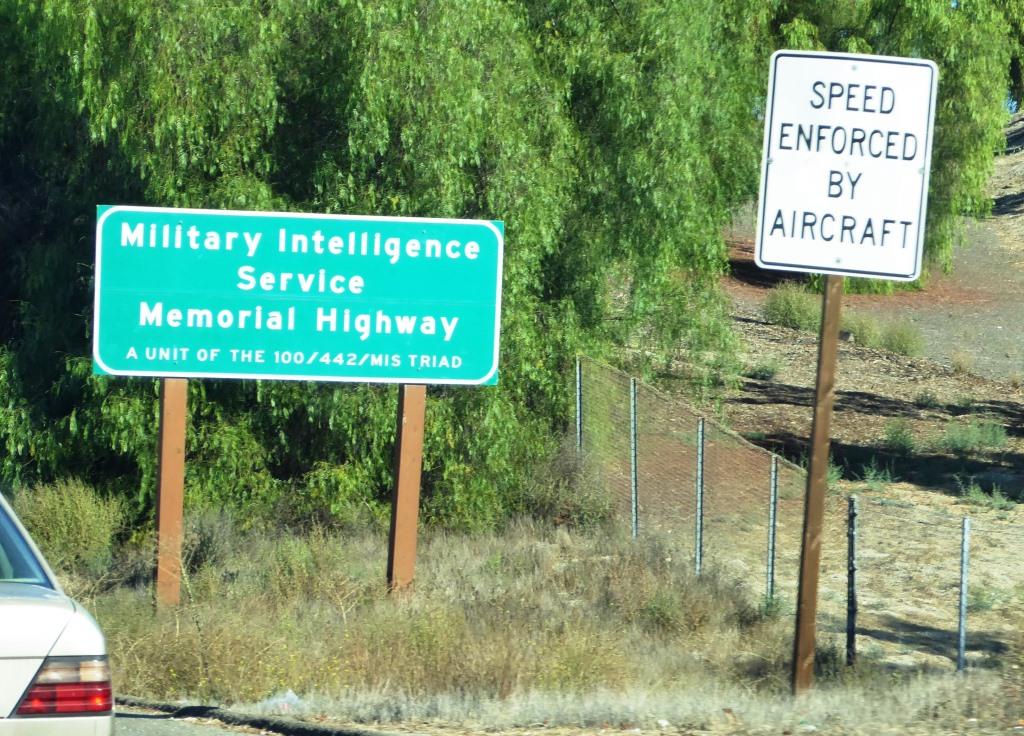
The most visible section of SR 23 in Thousand Oaks is the Moorpark Freeway, which stretches from the 101 to the Los Angeles Avenue exit in Moorpark; about 8 miles. This middle section of the 23 was named the Military Intelligence Service Memorial Highway in 1994 by the California State Assembly. The renaming was made in honor of Nisei, or Japanese American, Soldiers of World War II who served in units of the U.S. Armed Forces comprising the 100/442/MIS triad (Military Intelligence Service, 100th Infantry Battalion and 442nd Regimental Combat Team). **

Military Intelligence Service Memorial Highway sign

Military Intelligence Service Memorial Highway sign

The northern section of SR 23 begins at Los Angeles Avenue (SR 118) in Moorpark and goes north as Grimes Canyon Road, ending at SR 126 in Fillmore. This is about a 12 mile stretch includes some eye opening, hilly twists and turns in the Grimes Canyon Road area.

The total length of SR 23 is about 32 miles.

** Some additional clarification from the 1994 legislation: Segments of State Highway Routes 23 and 99 are officially designated as follows: (a) State Highway Route 23, from Highway 101 to Highway 118, as the Military Intelligence Service Memorial Highway. (b) State Highway Route 99, between the Cities of Fresno and Madera, as the 100th Infantry Battalion Memorial Highway. (c) State Highway Route 99, between the Cities of Salida and Manteca, as the 442nd Regimental Combat Team Memorial Highway. Each of the signs to also include "A unit of the 100/422/MIS triad.

Tell Me a Little Bit About Newbury Park

Newbury Park is a community located in the western portion of Thousand Oaks. Most of Newbury Park became part of Thousand Oaks by community vote sometime in the 1960s and 1970s. Thousand Oaks became a city in October 1964.

A view of Newbury Park from Boney Peak in October 2021. (Feet Model: Conejo Joe)

Egbert Starr Newbury (Photo Courtesy Conejo Valley Historical Society)

Egbert Starr Newbury (Photo Courtesy Conejo Valley Historical Society)

Newbury Park is named after Egbert Starr Newbury, who owned thousands of acres of land in the Conejo Valley after moving to California from Michigan for health reasons in 1871.  Newbury was one of the three largest Conejo Valley landowners of his time. He and his wife Fannie became the first postmasters in the Conejo Valley in 1875.  The post office was located in a small compound near their house, which was located at the current location of the Thousand Oaks Civic Arts Plaza

The other major landowners at that time were John Edwards, who owned much of the current Newbury Park/Thousand Oaks area north of the 101, and Howard Mills, who owned much of what today is Westlake Village and Hidden Valley.

Edwards sold 10,000 acres of what is now central Thousand Oaks to Edwin and Harold Janss in 1893.  The Janss Corporation also bought thousands of acres of land in Newbury Park (Friedrich, Running Springs and Borchard Ranches) in 1962. 

There were efforts to incorporate Newbury Park in 1961 and 1963 that failed due to a lack of sufficient votes.

Over a 30 month period beginning in the Fall of 1876, only 6 inches of rain fell in the Conejo Valley.  This drought brought devastation to landowners, most of whom lost their crops and livestock and had to sell at a loss or went bankrupt.  The Newburys were no exception; they moved back to the midwest in 1877.  Egbert fell ill to pneumonia in 1880 and passed away at the young age of 36.

The Newburys lived here only six years, so why is it still called Newbury Park? Because the name of the Newburys' post office never changed! The Newbury Park Post Office has changed locations a number of times (including 1602 Newbury Road from May 1968 until it moved to its current location at 3401 Grande Vista Drive in 2013). So the Newbury name and legacy live on here in the Conejo Valley.

Horse tied to a sign indicating the Newbury Park Post Office, in 1909. The location was near modern-day Lynn Ranch. (Courtesy of the Thousand Oaks Library Local History Photo Collection).

Horse tied to a sign indicating the Newbury Park Post Office, in 1909. The location was near modern-day Lynn Ranch. (Courtesy of the Thousand Oaks Library Local History Photo Collection).

Sources: "The Conejo Valley - Old and New Frontiers" by Carol A. Bidwell and "The Newburys of Newbury Park" by Miriam Sprankling

But wait...there's more to Newbury Park! Casa Conejo is also part of the Newbury Park community but is not an incorporated part of Thousand Oaks. It is considered a census-designated place in Ventura County, with its own Municipal Advisory Council. Casa Conejo is the first planned community in Newbury Park and was built in the early 1960s. It has an area of .5 square mile and is bound by Borchard to the south, Old Conejo Road to the north, Jenny Drive (east of Newbury Park High School) to the west and Sequoia Middle School to the east.

TELL ME ABOUT THE HISTORY OF THE STREET NAMES IN THE CASA CONEJO NEIGHBORHOOD

Interested in historical pictures of the area going back to the 1950s?  Click here to read about the work of prolific Conejo Valley photographer, Ed Lawrence. 

Click here for a history of Thousand Oaks. Thousand Oaks is over 56 square miles and Newbury Park represents about 40% of that square footage. Thousand Oaks was incorporated as a city on October 7, 1964.

Three dozen or so things to do in Newbury Park

Another three dozen or so kids' activities in Newbury Park

Yet another three dozen or so sports and fitness activities in Newbury Park

The "Scary Dairy" at CSU Channel Islands University Park in Camarillo

CSU Channel Islands University Park is a 367 acre parcel located adjacent to CSU Channel Islands off of S. Lewis Road in Camarillo. It is a regional educational and recreation area owned and operated by California State University Channel Islands.

In 1932, the State of California purchased 1,760 acres of the Lewis Ranch and built the Camarillo State Mental Hospital, which operated from 1936 to 1997 and at one point treated as many as 7,000 patients in the mid 1950s.

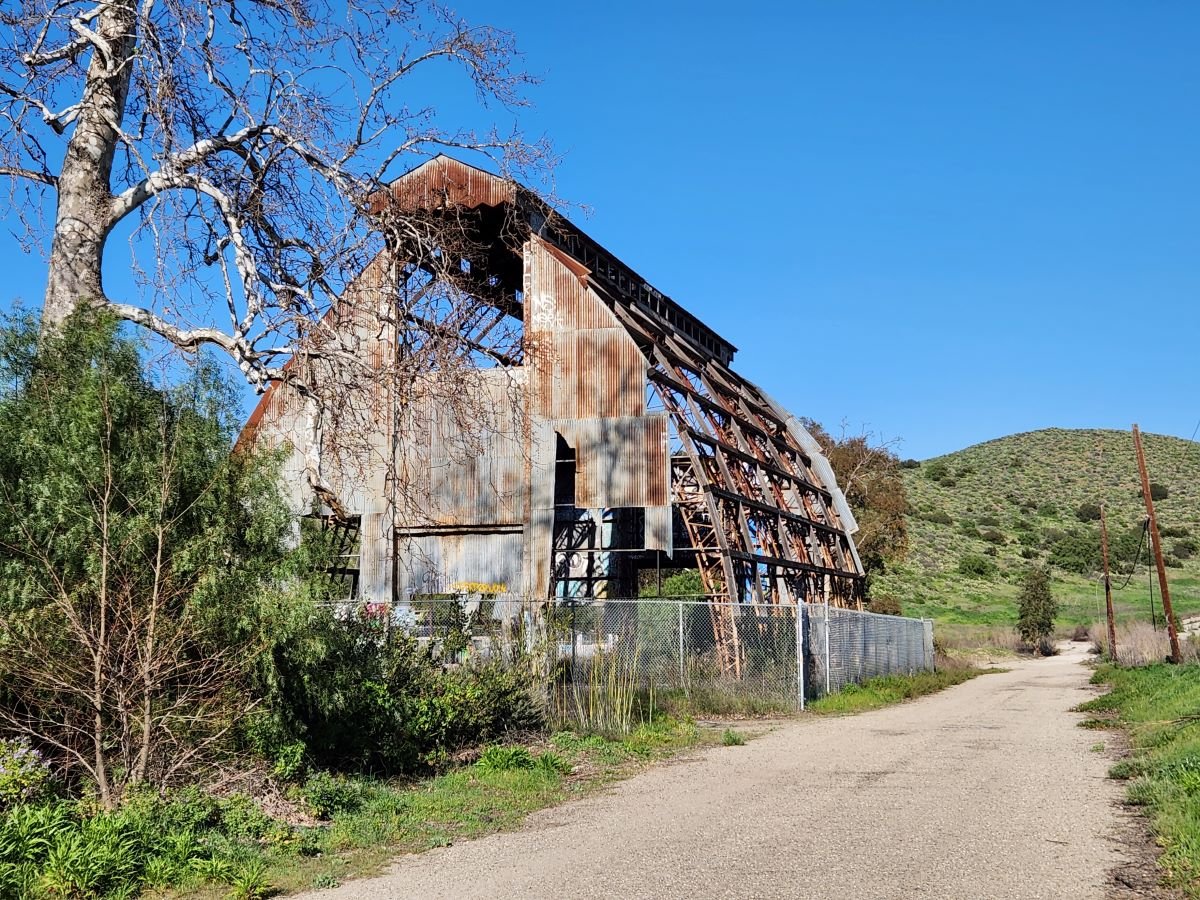
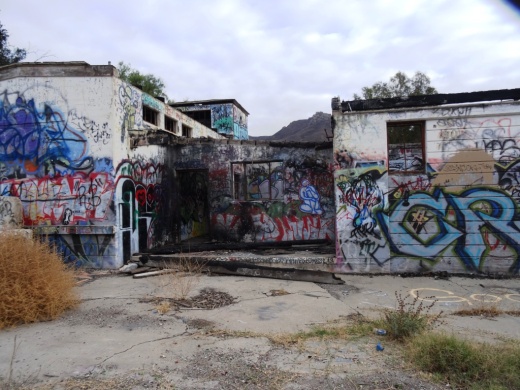
Located on the parcel was a dairy farm that produced crops and housed livestock that fed the hospital community. The farm was disbanded in the 1960s and has been left in a state of disrepair, falling prey over the decades to vandals and coined "Scary Dairy."

After closure of the hospital, the land was conveyed to the County of Ventura, which had considered developing a golf course and amphitheater there but later abandoned its plans. The land was acquired by the University in 2009.

Fences and "No Trespassing" signs now surround what's left of the structures. but you can still get pretty close to check out Scary Dairy.

ScaryDairy1.JPG

CSU Channel Islands University Park is open to the public daily from sunrise to sunset. From Camarillo, take Lewis Road south to Camarillo Street and turn left (east).  Cross the bridge over Calleguas Creek and the entrance is on the left. Parking is $6 per vehicle (as of 2022). Do note that there are no facilities at this park, like restrooms and drinking fountains.

Visit www.csuci.edu/cipark for more information.

ScaryDairy4.JPG
ScaryDairy5.JPG
ScaryDairy7.jpg
ScaryDairy3.JPG

Tell Me About the History of the Street Names in Casa Conejo in Newbury Park

Casa Conejo is an unincorporated Ventura County community of about 1,000 homes located in Newbury Park. Casa Conejo is a rectangular shaped island within Thousand Oaks city limits, but is not part of the city. Although Casa Conejo is considered part of Newbury Park, it is not part of the majority of Newbury Park within the boundaries of the City of Thousand Oaks.

Casa Conejo Map.jpg

Premiering in 1960, Casa Conejo was the first planned community in Newbury Park. Several folks have asked about the origin of the street names in Casa Conejo. Here goes (with the help of a relative of the original developers):

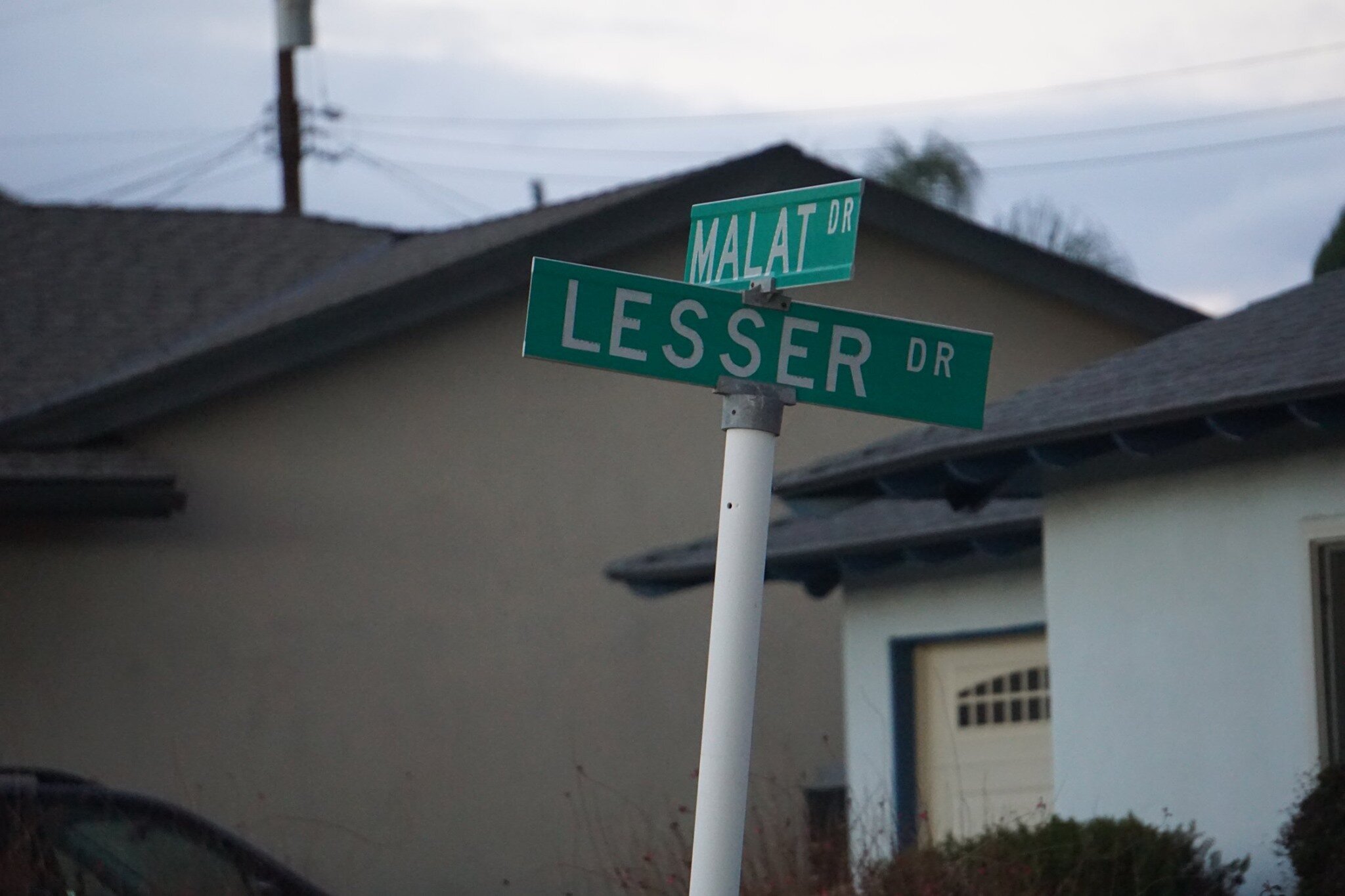
Louis Lesser Enterprises developed Casa Conejo. Members of the Lesser and Malat families created the street names; hence Lesser and Malat Drives, Rudman Drive came from Louis Rudman, also related through marriage to the Lessers, and who managed home sales.

malat and lesser.jpg
rudman and lesser.jpg

William Malat (William Drive) had twin sons, Melvin (Melvin Ct) and Gerald (Gerald Drive). William's wife was Ethel (Ethel Ct). Louis Lesser's wife was Jeanne (Jeanne Ct). Louis Lesser's brother, Alvin "Sonny" was married to Martha (Martha Dr). Louis Rudman's wife was Shirley (Shirley Dr), who was also Ethel’s sister. One of Sonny's daughters is Dena (Dena Dr).

dena and gerald.jpg

Ben (Ben Ct) and Lily (Lily Ct) were Louis and Alvin Lesser's parents. Michael (Michael Drive) is a cousin (by marriage) of the Lessers and Malats. Cathy (Cathy Dr) and Francine (Frankie Dr) were two of Louis and Jeanne’s four children. Lisa Rudman (Lisa Ct) is related to the Rudmans (I suspect their daughter).

The jackpot winner was WENDY, who has by far the longest street, not to mention a freeway on/offramp and overpass, named after her! Wendy, who lives in AZ, is a granddaughter of William Malat and daughter of Melvyn. Before it became Wendy Drive in mid-1961, it was called Avenida de la Felicidad.

There are a couple dozen other streets in Casa Conejo that I don’t have the source for at this time, but perhaps I’ll do some more digging:

North/South Streets: Jenny Drive, Gerst Drive, Ruth Drive, Lois Ave, Dorena Drive, Kitty St, Bella Dr, Randy Dr, Debbie St, Cay Ct, Henry Dr, Devia Dr, Virginia Dr, Nellie Ct, Bob Ct, Elinor Ct.

East/West Streets: Gloria Dr, Carl Ct, Alice Dr, Lynn Ct, Lois Ct, Verna Ave.

wendy drive.jpg